How does it work?
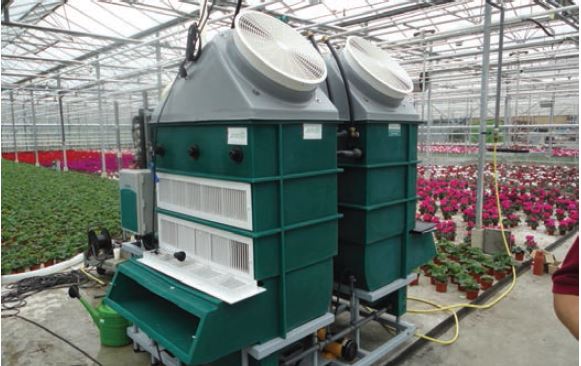
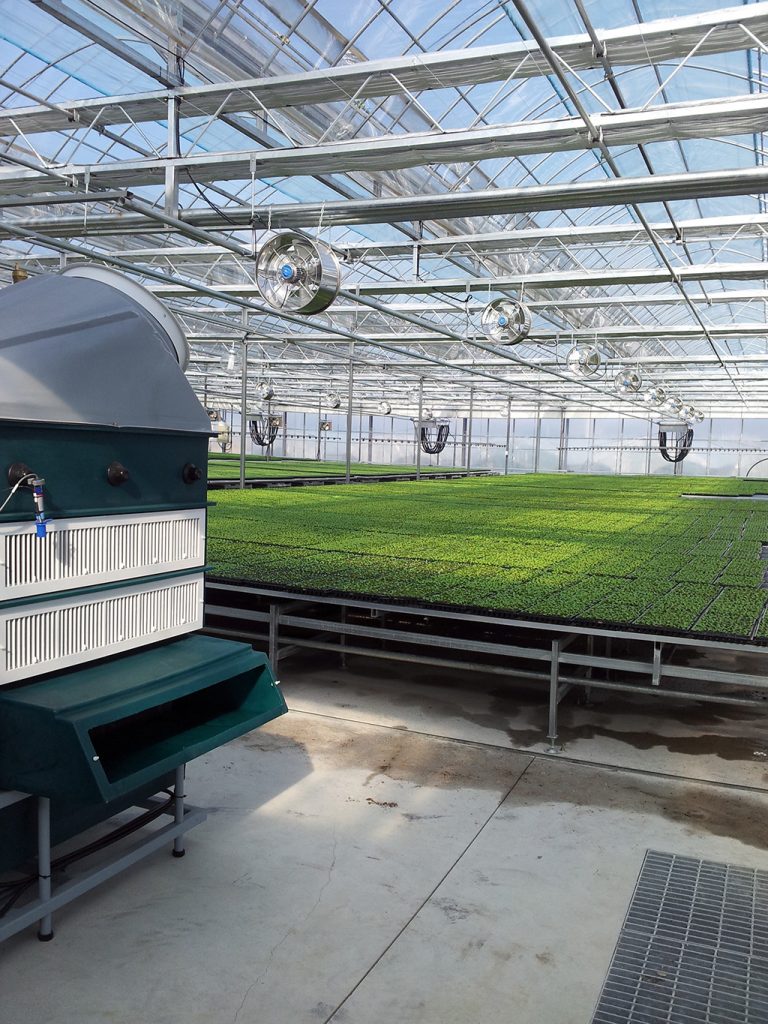
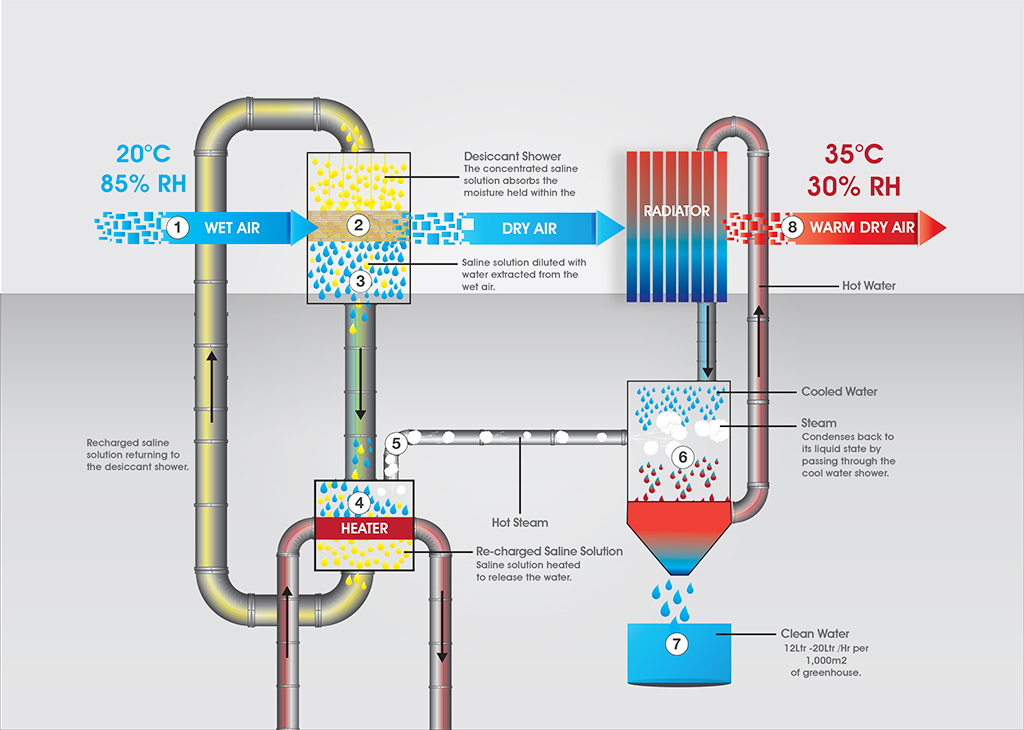
The ECC draws in humid air from within the glasshouse (1). The water vapour is then removed by passing the air through a matrix of desiccant filled elements inside a compact (cooling-type) tower (2).
The desiccant (an extremely concentrated saline solution) absorbs water vapour from the air (3) and then passes through a heater which is heated from your existing hot water system (4).
This process releases (evaporates) the captured water from the desiccant (5) and later condenses it back into its liquid state (6) to then be expelled from the unit (7).
The hot-water energy input (used to heat the saline solution) is not lost or ‘used-up’, most of it is returned to the glasshouse heating system. The small amount of heat which is absorbed by the saline solution is later released back in to the greenhouse atmosphere via the radiator as warm, dry, spore-free air (8), just as original intended, meaning this process has NO energy costs.
During this process, the latent heat which is held within the water vapour naturally warms up the desiccant. This heat is also released by the unit, back into the greenhouse atmosphere. The desiccant also has a disinfecting effect on the air being returned to the glasshouse, further reducing disease carrying spores such as Botrytis and powdery mildew, along with various bacteria and viruses.
(Click image above to enlarge)
Why do you need the ECC?
You are probably using heat combined with ventilation to remove the humidity which builds up inside your greenhouse. Once you open the vents, more heat is then needed to stabilise the environment and more CO₂ enrichment could also be required. The ECC removes the need to vent humidity.
If your crop suffers from excessive humidity then you will be paying for expensive chemical applications to reduce the effect of Botrytis cinerea and other fungal diseases. The ECC reduces humidity, and therefore the damage caused by excessive humidity, whilst also killing fungal spores.
What does it cost to run?
Very little! The primary energy input comes from your hot water boiler. The ECC is simply plumbed in to your existing hot water system. All of this heat is released back in to the greenhouse atmosphere.
The only additional energy requirement is a small amount of electricity (approx. 2.5kWh) to run the ECC’s small water pumps and fans. Bearing in mind, you would need to run air circulation fans anyway.
Coverage
One unit will cover 1,000-2,000m² depending on the crop. Typically, a crop of mature tomatoes, peppers etc. could need one unit per 1,000m², whereas herbs, bedding, young plants etc. may only require one unit for 2,000m².
Further cost savings
Furthermore, the ECC cost-effectively cleans and filters greenhouse air without expelling costly CO₂ enriched air – removing harmful fungal spores whilst reducing the need for additional CO₂-enriched air inputs – further lowering heating expenses and fungicide applications.